Frequently Asked Questions
Find answers to common questions about IBC totes and our services.
Get Your Free Estimate
General Questions
What is an IBC tote?
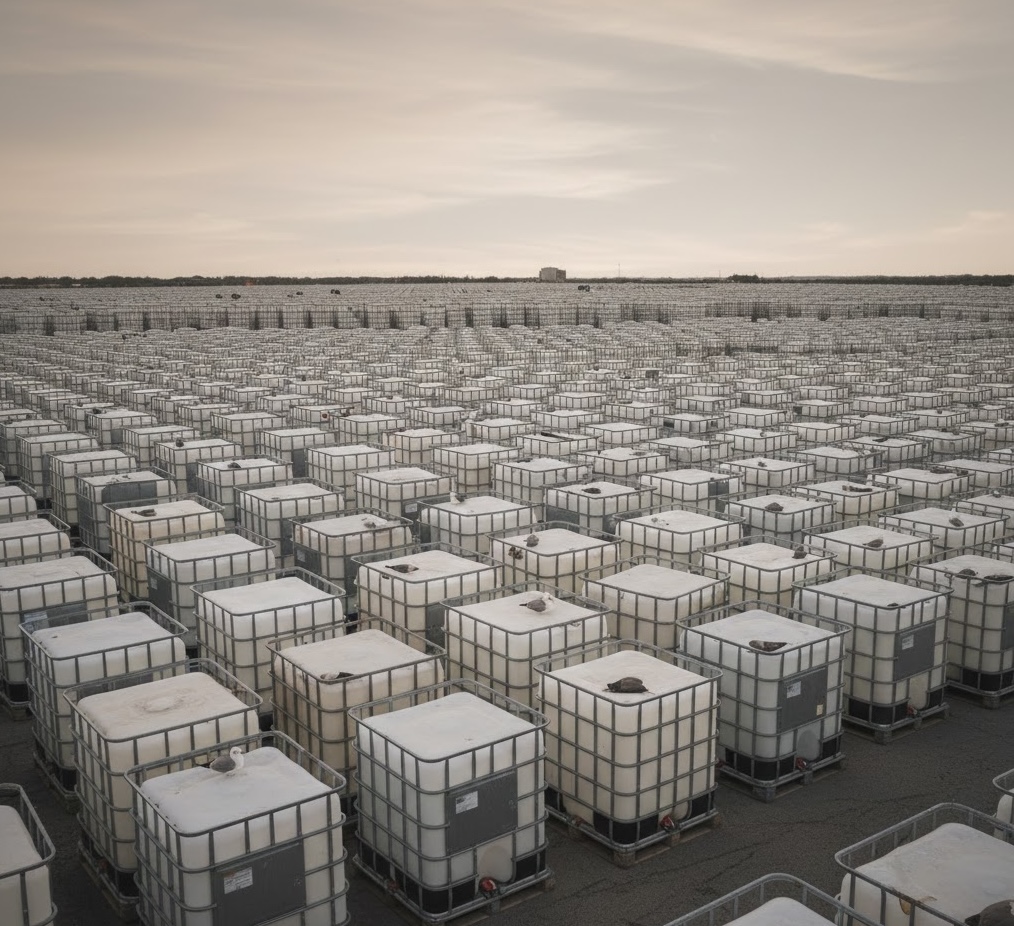
An IBC (Intermediate Bulk Container) tote is a reusable industrial container designed for storing and transporting bulk liquids and granulated materials. Standard IBC totes hold 275-330 gallons and consist of a plastic inner bottle, steel cage, and pallet base. They are widely used in industries including food & beverage, chemical manufacturing, pharmaceuticals, agriculture, and more.
What are IBC totes used for?
IBC totes are used across many industries for storing and transporting liquids including chemicals, food ingredients, beverages, pharmaceuticals, oils, soaps, and agricultural products. They are also popular for rainwater collection, water storage, aquaponics systems, and DIY projects. Their versatility makes them suitable for both industrial and residential applications.
What is the difference between new and used IBC totes?
New IBC totes have never contained any products and come with manufacturer warranties. Used totes have been previously filled, but when properly cleaned and inspected, they can serve the same purposes at 40-60% less cost. Used IBCs are an economical and environmentally responsible choice for many applications.
Are used IBC totes safe for food storage?
Yes, Grade A used IBCs that originally held food-grade products and have been properly cleaned can be safe for food storage. We clearly label food-grade containers and provide documentation of previous contents when available. Always verify the container meets your specific food safety requirements.
What does IBC stand for?
IBC stands for Intermediate Bulk Container. The term "intermediate" refers to their size - larger than standard drums (typically 55 gallons) but smaller than tank trucks. This makes them ideal for medium-volume storage and transport needs.
How much does an IBC tote weigh?
An empty composite IBC tote typically weighs between 100-150 lbs (45-68 kg). When full with water at 8.34 lbs per gallon, a 275-gallon IBC weighs approximately 2,400 lbs (1,090 kg), and a 330-gallon IBC weighs approximately 2,900 lbs (1,315 kg).
What is the standard size of an IBC tote?
Standard composite IBC totes have a 48" x 40" footprint (matching standard pallet sizes) and are approximately 46" tall. Capacities range from 264 to 350 gallons, with 275 and 330 gallon sizes being most common.
Buying IBCs
What grades of IBC totes do you offer?
We offer three grades: Grade A (like new, minimal use, ideal for food-grade applications), Grade B (good condition, moderate use, great value for most applications), and Grade C (economy, visible wear but fully functional, perfect for non-sensitive storage). Each grade is thoroughly inspected and priced accordingly.
What sizes are available?
Our most common sizes are 275-gallon and 330-gallon totes. We also occasionally have 264-gallon (1,000 liter) and 350-gallon containers. Availability varies, so contact us for current inventory.
Is there a minimum order?
No, we have no minimum order requirement. You can purchase a single tote or hundreds - we accommodate all order sizes. Whether you need one container for a home project or a hundred for industrial operations, we are here to help.
Do you offer volume discounts?
Yes! Orders of 11-50 units receive 5% off, 51-100 units receive 10% off, and orders over 100 units are priced individually based on quantity and requirements. Contact us for large order quotes.
Can I see the totes before buying?
Absolutely! You are welcome to visit our Auburn, WA facility to inspect containers before purchase. We encourage customers to see our inventory firsthand. Please contact us to schedule an appointment.
What payment methods do you accept?
We accept cash, checks, all major credit cards, wire transfers, and company purchase orders (with approved credit). For large orders, we can discuss payment terms.
Do you have IBCs with different valve types?
Yes, we stock IBCs with various valve configurations including 2" and 3" butterfly valves, ball valves, and camlock fittings. Let us know your requirements and we will match you with the right container.
What should I look for when buying a used IBC?
Key things to check include: the condition of the inner bottle (cracks, discoloration, staining), cage integrity (rust, bent bars), valve operation, gasket condition, and pallet stability. Our grading system accounts for all these factors.
Can I get IBCs with specific previous contents?
We try to accommodate requests for containers with specific previous contents (e.g., food-grade products only). While we cannot always guarantee availability, contact us with your requirements and we will do our best.
Selling IBCs
What types of IBCs do you buy?
We buy most composite (plastic/steel) and stainless steel IBCs in any condition. We cannot accept containers that held hazardous materials requiring special disposal, certain pesticides, or containers with unknown contents.
How much will you pay for my IBCs?
Pricing depends on condition, quantity, location, previous contents, and current market demand. Clean, single-use containers in good condition command the highest prices. Contact us with details about your containers for a competitive quote.
Do you pick up containers?
Yes, we offer pickup service throughout Washington State and the Pacific Northwest. For large quantities or locations outside our normal service area, we may arrange freight or provide pickup credits.
How quickly will I be paid?
For containers brought to our facility, payment is immediate. For pickup orders, payment is typically processed within 5-7 business days after pickup. We offer check or direct deposit for your convenience.
What is the minimum quantity for pickup?
For free pickup within our local service area (50 miles of Auburn), we typically require a minimum of 10 containers. Smaller quantities may be subject to pickup fees. Bring any quantity directly to our facility.
Do I need to clean the IBCs before selling?
No, cleaning is not required. However, containers that are already clean or only had food-grade products may receive higher pricing. We handle all cleaning and reconditioning in-house.
Can I sell damaged IBCs?
Yes, we buy damaged IBCs for repair or recycling. Damaged containers receive pricing based on their salvage value. Even heavily damaged IBCs have value for their steel and plastic components.
Delivery & Logistics
What areas do you deliver to?
We deliver throughout Washington State, Oregon, Idaho, and western Montana. We also serve parts of British Columbia, Canada. Contact us for delivery to other areas - we can often arrange shipping nationwide.
How much does delivery cost?
Delivery costs depend on distance, quantity, and access requirements. Local deliveries within 50 miles of Auburn start at competitive rates. We provide delivery quotes with all orders.
Do I need special equipment to receive delivery?
Ideally, you should have a forklift or pallet jack to unload IBCs. If you don't have equipment, let us know - we can discuss options including liftgate delivery (additional fee) or arrangements for hand unloading empty containers.
How are IBCs shipped?
IBCs are typically shipped on flatbed trucks and can be loaded 20-24 per standard truckload. For smaller quantities, we use smaller trucks or arrange LTL freight. All IBCs are properly secured for transport.
Can I pick up containers myself?
Yes! Many customers prefer to pick up from our Auburn, WA facility. We have loading equipment on-site and can load pickup trucks, flatbeds, and trailers. Just bring appropriate tiedowns.
What are your facility hours?
Our Auburn facility is open Monday through Friday, 8:00 AM to 5:00 PM. Saturday hours are available by appointment. We close on major holidays.
Repair & Reconditioning Services
What repair services do you offer?
We offer comprehensive repair services including: valve replacement (butterfly, ball, camlock), cage repair and straightening, bottle replacement, cap and gasket replacement, pallet repair/replacement, label removal, and complete reconditioning.
Can you clean my IBCs for reuse?
Yes, we offer professional cleaning services including high-pressure washing, triple rinse procedures, chemical cleaning for stubborn residues, and steam sterilization. We can prepare containers to meet food-grade, pharmaceutical, or other industry standards.
How much do repairs cost?
Repair costs vary by service. Common repairs like valve replacement typically cost less than purchasing a new IBC. We provide free estimates before any work is performed.
Can you replace the inner bottle?
Yes, we can replace damaged HDPE bottles with new or reconditioned bottles. This is often more economical than buying a new IBC when the cage and pallet are in good condition.
Do you offer rebottling services?
Yes, rebottling involves installing a new HDPE bottle in an existing cage/pallet assembly. This extends the life of your IBCs and is particularly cost-effective for customers with multiple units needing bottle replacement.
Can you customize IBCs with specific fittings?
Yes, we can modify IBCs with different valve types, additional ports, sight gauges, and other custom fittings. Contact us to discuss your specific requirements.
Recycling & Sustainability
Do you recycle damaged IBCs?
Yes, we accept end-of-life IBCs for recycling. We disassemble containers and recycle the HDPE plastic, galvanized steel, and other materials responsibly. Our recycling rate exceeds 98%.
What happens to recycled IBC materials?
HDPE plastic is cleaned, granulated, and processed into recycled pellets for manufacturing new plastic products. Steel is sent to metal recyclers and eventually becomes new steel products. Wooden pallets are chipped for mulch or biomass fuel.
Is there a fee for recycling IBCs?
In most cases, we pay you for recyclable IBCs based on their material value. Heavily contaminated containers requiring special handling may have processing fees. Contact us for a quote.
How does buying used IBCs help the environment?
Each reused IBC keeps approximately 100 lbs of plastic out of landfills and reduces demand for new plastic production. Using reconditioned containers reduces carbon emissions associated with manufacturing new IBCs by up to 70%.
Do you provide recycling documentation?
Yes, we can provide certificates of recycling and destruction for customers who need documentation for compliance or sustainability reporting purposes.
Technical Information
What materials are IBC totes made from?
Standard composite IBCs have an HDPE (High-Density Polyethylene) inner bottle, galvanized steel tube cage, and a pallet made of steel, plastic, or wood. The HDPE is food-safe and chemical-resistant. Some specialty IBCs feature stainless steel construction.
What is the lifespan of an IBC tote?
With proper care and maintenance, an IBC tote can last 5-10 years or more. The HDPE bottle has a typical lifespan of 5-7 years before UV degradation becomes a concern. Steel cages can last much longer. UN-certified containers for hazardous materials have a 5-year certification period from manufacture date.
Can IBCs be stacked?
Yes, most IBCs are designed to be stacked 2-4 high when full (check manufacturer specs). The cage transfers weight to the corners, protecting the bottle. Empty IBCs can typically be stacked higher. Always ensure bottom containers are in good condition and on level ground.
What is the UN rating on an IBC?
UN ratings indicate the container is tested and certified for transporting dangerous goods. Common ratings include 31HA1/Y for composite IBCs. The rating includes information about the container type, construction, and maximum specific gravity of contents.
What temperatures can IBCs withstand?
Standard HDPE IBCs are rated for temperatures between approximately -40°F to 140°F (-40°C to 60°C). Contents should not exceed 140°F when filling. For extreme temperatures, specialized containers are available.
Are IBCs compatible with all chemicals?
HDPE is resistant to many chemicals but not all. Strong oxidizers, certain solvents, and some concentrated acids can damage HDPE. Always verify chemical compatibility before use. We can provide compatibility guidance.
What is the difference between FDA and food-grade?
FDA-approved materials are certified safe for food contact. "Food-grade" generally means the container was manufactured with FDA-approved materials and is suitable for food products. For used IBCs, previous contents must also have been food-safe.
How do I identify the manufacture date of an IBC?
The manufacture date is typically molded into the HDPE bottle, often near the bottom or on the top lid. Look for a clock-like symbol or date code. The steel plate on the cage also contains manufacturing information.
Can IBCs be used for potable water?
IBCs can be used for non-potable water storage (irrigation, washing, etc.). For potable/drinking water, use only new food-grade IBCs or carefully verified used containers that only held approved food products. Additional precautions may be needed.
Safety & Compliance
Are your IBCs DOT approved for transport?
UN/DOT certified IBCs in our inventory are approved for transporting regulated materials when within their certification period (5 years from manufacture). We clearly mark certification status on all applicable containers.
How should IBCs be stored?
IBCs should be stored on level ground, away from direct sunlight when possible (UV degrades HDPE), protected from physical damage, and secured against tipping. Indoor storage is ideal for extended periods.
What safety precautions should I take?
Always use appropriate PPE when handling chemicals. Secure IBCs during transport. Use proper lifting equipment - never lift by the valve. Ensure adequate ventilation when filling/emptying. Follow all OSHA and local safety regulations.
Do IBCs require grounding?
For flammable liquids, IBCs should be properly grounded to prevent static discharge. Our composite IBCs have grounding plates built into the cage. Follow proper grounding procedures for your specific application.
How do I dispose of an IBC that held hazardous materials?
IBCs that contained hazardous materials must be handled according to EPA and state regulations. Contact a licensed hazardous waste disposal company. We can provide guidance on proper disposal procedures.
Still Have Questions?
Can't find the answer you're looking for? Our team is happy to help with any questions about IBC totes or our services.
Contact Us